
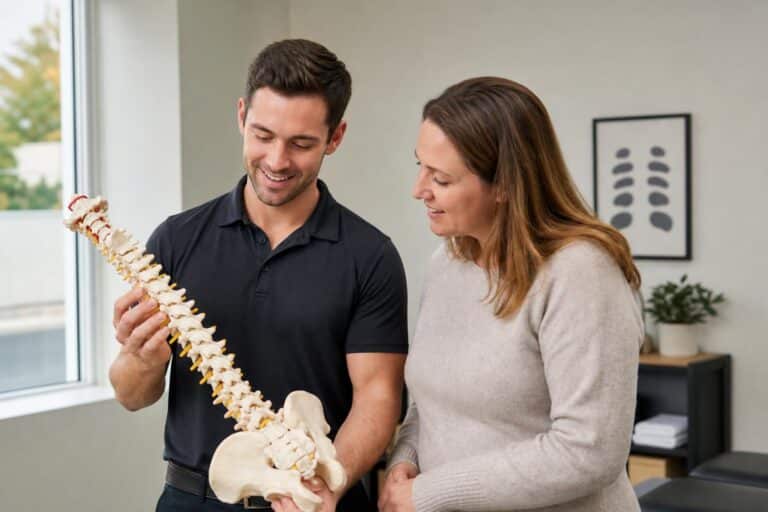
Finding the right associate chiropractor for your California practice is one of the most consequential decisions you’ll make as an owner. The candidate market is tight, the legal landscape is unique to the state, and compensation expectations have shifted dramatically in recent years. With roughly five open positions for every available associate DC, you can’t afford to wing it. This guide walks you through everything you need to know: realistic costs, licensing rules, California-specific employment law, sourcing strategies, and a clear step-by-step hiring process.
Hiring an Associate DC in California: Key Facts
The average associate chiropractor salary in California ranges from $90,000 to $105,000 per year. All associates must hold an active license through the California Board of Chiropractic Examiners. Non-compete agreements are not enforceable in California under Business and Professions Code § 16600, with SB 699 and AB 1076 (effective January 2024) making enforcement attempts unlawful. Expect the typical time-to-hire for an associate DC to run 60 to 120 days. A strong compensation package and clear role definition are the two biggest factors in attracting top talent.
The Associate Hiring Landscape in California
California is home to three chiropractic colleges and thousands of active practices, yet finding a qualified associate remains stubbornly difficult. The ratio of open positions to available candidates sits at roughly five to one. That imbalance gives associates significant bargaining power and leaves practice owners competing for the same small pool of graduates and experienced DCs.
Why is it so hard? Many new graduates leave the state for lower cost-of-living areas. Others pursue solo practice sooner than previous generations did. And California’s high housing costs mean your compensation package needs to be genuinely competitive, not just on paper.
If you’re a practice owner planning to hire an associate chiropractor in California, start the process earlier than you think you need to. Most chiropractors wait too long to begin recruiting. A realistic timeline is 90 days from job posting to a signed agreement, and that assumes you’re actively sourcing candidates from day one. Passive approaches: posting an ad and hoping for the best: rarely work in this market.
Your “why” matters too. Are you hiring for growth, to free up your personal schedule, or to build toward a legacy transition? That answer shapes the type of associate you need: a business builder who can drive new patient acquisition, or a care giver who can handle your existing patient volume while you step back.
What Does an Associate Chiropractor Cost in California?
Base salary for an associate DC in California typically falls between $90,000 and $105,000 annually. That’s above the national average, which the Bureau of Labor Statistics pegs closer to $75,000 to $85,000 for chiropractors overall. California’s higher cost of living and competitive market drive the premium.
But the base number only tells part of the story. Many practices use a hybrid compensation model: a guaranteed base salary plus a percentage of collections once the associate hits a production threshold. Collection percentages usually range from 20% to 30%, depending on the structure. Some owners offer a higher collection rate with a lower base, while others prefer a strong guaranteed salary with a smaller bonus component.
Signing bonuses have become more common, particularly in underserved areas or for associates with specific technique experience. Expect to see requests for $5,000 to $15,000 signing bonuses. Benefits like health insurance, CE reimbursement, and paid time off also factor into the total package.
A good associate should deliver a 3X return on their compensation. If you’re paying $100,000 and your associate generates $300,000 or more in collections, the math works. Structure your comp plan so both sides benefit from growth, and you’ll retain that associate far longer than if you offer a flat salary with no upside.
Licensing Requirements for Associate DCs in California
Every chiropractor practicing in California must hold a valid license issued by the California Board of Chiropractic Examiners (BCE). There are no exceptions for associates working under a supervising DC. Your candidate needs their own individual license before they treat a single patient in your office.
To obtain a California chiropractic license, a candidate must graduate from an accredited Doctor of Chiropractic program, pass the National Board of Chiropractic Examiners (NBCE) exams (Parts I through IV, plus Physiotherapy), and pass the California state-specific law and ethics examination. The BCE also requires a background check and fingerprinting as part of the application process.
For out-of-state DCs, California does not offer direct reciprocity. A chiropractor licensed in another state can’t simply transfer their license. They must apply to the BCE, submit transcripts, verify their exam scores, and pass the California law exam. This process can take 8 to 16 weeks depending on how quickly the board processes applications and how responsive the candidate’s school is with transcripts.
New graduates from California schools have a slight advantage since their programs are already aligned with state requirements. But even they should apply for licensure well before their intended start date. Board processing times fluctuate, and delays aren’t uncommon.
As a hiring practice owner, you should verify your candidate’s license status directly through the BCE website at https://www.chiro.ca.gov/. Don’t rely on a candidate’s word alone. Confirm their license is active, unrestricted, and in good standing before finalizing any offer. Rules and timelines change, so always check the board’s current requirements directly.
Employment Law & Non-Competes for Chiropractors in California
California’s employment laws create a distinct environment for hiring associate chiropractors, and you need to understand the rules before drafting any agreement.
The biggest difference from most other states: non-compete clauses are void in California. Business and Professions Code § 16600 has long prohibited employee non-competes. SB 699 and AB 1076, both effective since January 2024, went further by making it unlawful to even attempt to enforce a non-compete against a California employee. Employers who try face civil penalties and potential private lawsuits. Don’t include a non-compete in your associate agreement. It won’t hold up, and it could cost you.
You can still protect your practice through other legal tools. Non-solicitation agreements (preventing an associate from actively poaching your patients or staff) may have limited enforceability in California, so consult an attorney. Confidentiality agreements protecting proprietary systems, patient lists, and business methods are generally enforceable when properly drafted.
Worker classification is another critical issue. California’s ABC test under AB 5 makes it very difficult to classify an associate DC as an independent contractor. Most associate chiropractors working set hours in your office, using your equipment, and treating your patients will be classified as W-2 employees. Misclassification carries serious penalties including back taxes, benefits, and fines.
Your associate agreement should clearly outline compensation structure, duties, schedule, termination provisions, malpractice insurance responsibilities, and any restrictive covenants you can legally include. This is general information, not legal advice. Work with a California-licensed attorney who understands healthcare employment law to draft or review your contract.
Where to Find Associate Chiropractor Candidates in California
California has three chiropractic colleges, and they’re your best starting point for sourcing candidates. Life Chiropractic College West in Hayward, Palmer College of Chiropractic West in San Jose, and Southern California University of Health Sciences in Whittier all produce graduates who already understand the state’s regulatory environment. Building relationships with career services departments at these schools gives you early access to candidates before they hit the open market.
The California Chiropractic Association (CCA) maintains job boards and networking events that connect practice owners with potential associates. State and regional seminars also offer opportunities to meet candidates face-to-face. Don’t underestimate the power of showing up in person at these events.
Online job boards like Indeed, ChiroHealthUSA, and DynamicChiropractic.com are standard posting channels. They’ll generate some applicants, but response rates can be low, and the quality varies widely. You’ll spend significant time screening resumes, scheduling interviews, and following up with candidates who ghost you.
Referral networks remain one of the most effective channels. Ask colleagues, mentors, and your existing professional contacts if they know any associates looking for a position. A warm introduction converts at a much higher rate than a cold job posting.
Here’s the honest truth about DIY recruiting: it’s time-consuming and unpredictable. Most practice owners are already stretched thin treating patients and running their business. Spending 10 to 15 hours a week on recruiting pulls you away from revenue-generating activities. That’s where a specialized recruiting partner like Chiro Match Makers can save you significant time. Their team handles sourcing, vetting, and initial interviews so you can focus on your practice while still finding the right fit.
How to Hire an Associate Chiropractor in California, Step by Step
Start by defining the role clearly. Are you looking for a care giver to handle existing patient volume, or a business builder who’ll help grow the practice? Your answer determines the skill set, personality traits, and experience level you’re targeting. Write out the specific duties, schedule, technique requirements, and growth expectations before you post anything.
Next, build your compensation package. Use the $90,000 to $105,000 base range as your starting point, then decide on your production bonus structure, benefits, and any signing incentive. Put the full package in writing so candidates can evaluate the total opportunity, not just the base number.
Write a compelling job posting that speaks directly to what associates care about: mentorship, growth potential, technique alignment, work-life balance, and clear compensation. Generic postings attract generic candidates.
Screen applicants with a phone interview first. A 15-to-20-minute call reveals whether someone’s communication style, career goals, and personality are worth a longer conversation. Use behavioral assessment tools to identify candidates who match your practice culture. Chiro Match Makers uses behavioral assessments specifically designed for chiropractic placements, which helps predict long-term fit beyond what a resume shows.
Bring your top two or three candidates in for working interviews. Have them observe your practice flow, meet your team, and if possible, perform a supervised adjustment. You’ll learn more in a half-day working interview than in ten phone calls.
Extend your offer in writing with a clear deadline for acceptance. Include all terms: salary, bonuses, benefits, start date, and any contingencies like background checks or license verification. Run background and credential checks before the start date, not after.
Finally, build a structured onboarding plan. The first 90 days determine whether your new associate thrives or struggles. Assign a training schedule, introduce them to patients gradually, and set weekly check-in meetings to address questions early.
Hiring an Associate Chiropractor in California: FAQ
How much does an associate chiropractor cost in California? Most associate DCs in California earn between $90,000 and $105,000 in base salary. Total compensation, including production bonuses and benefits, can reach $120,000 to $140,000 for experienced associates. California consistently runs above the national average due to the cost of living and market competition.
How long does it take to hire an associate in California? Plan for 60 to 120 days from the time you begin actively recruiting. If your candidate needs to obtain or transfer a California license, add another 8 to 16 weeks for board processing. Starting the search three to six months before your ideal start date gives you the best chance of finding a strong match.
Are non-competes enforceable for chiropractors in California? No. California voids employee non-compete agreements under Business and Professions Code § 16600. SB 699 and AB 1076 make it unlawful to even attempt enforcement. Including a non-compete in your associate contract exposes you to civil penalties and private lawsuits.
Do I need to offer a base salary, or can I pay production only? While production-only compensation isn’t illegal, it creates significant risk under California wage and hour laws. You must ensure the associate earns at least minimum wage for all hours worked, and you need to comply with California’s strict pay frequency and overtime rules. A guaranteed base with a production bonus is safer and far more attractive to candidates.
Can I hire a chiropractor licensed in another state? Yes, but they must obtain a California license through the Board of Chiropractic Examiners before practicing. California doesn’t offer direct reciprocity. The out-of-state DC will need to verify their exam scores, submit transcripts, and pass the California law exam. Factor this timeline into your hiring plan.
What should my associate agreement include? At minimum, cover compensation structure, job duties, schedule, termination clauses, malpractice insurance responsibilities, confidentiality provisions, and any restrictive covenants that are legally enforceable in California. Have a California-licensed attorney review the agreement before you present it to your candidate.
Hire Your Next Associate in California With Chiro Match Makers
Hiring an associate DC is one of the most important investments you’ll make in your practice. Getting it right means more patients served, more revenue generated, and more freedom in your schedule. Getting it wrong costs you months of lost time and tens of thousands of dollars.
Chiro Match Makers specializes exclusively in chiropractic hiring. Their team handles sourcing, behavioral assessments, vetting, and initial interviews so you don’t have to. They’ve placed hundreds of associate DCs and chiropractic assistants, building dream teams for practices across California and beyond. As one practice owner, Sabrina Gya, put it: “My current VA is probably the best team member I have had in the last 25 years of being a business owner.”
If you’re also looking to add front desk or administrative support without the overhead of a full-time local hire, Chiro Match Makers offers high-caliber Virtual CAs starting at $9.87 per hour. Get started here and see how a virtual team member can support your practice growth.
Schedule a complimentary call with a Chiro Match Makers DC Placement Specialist today. Your next great associate is out there. Let someone who does this every day help you find them.
Sources
Salary and employment data referenced in this article draws from the U.S. Bureau of Labor Statistics Occupational Outlook Handbook for Chiropractors, updated through 2025. Licensing requirements and procedures are sourced from the California Board of Chiropractic Examiners at https://www.chiro.ca.gov/. Practice owners should verify all current licensing rules, fees, and timelines directly with the board, as these change periodically. California employment law references, including Business and Professions Code § 16600, SB 699, and AB 1076, are based on current statutory text. The California Chiropractic Association (https://www.calchiro.org/) provides additional resources for practice owners, including job boards and continuing education information. Hiring data and market insights are informed by Chiro Match Makers’ experience placing hundreds of chiropractic professionals nationwide.